
Journal ·
How to host a startup circle that founders actually come back to
Big startup events are good for business cards and bad for honest conversation. A startup circle is the opposite: eight to twenty founders in a room, meeting regularly, talking about what's actually going wrong.
A format that works
- Check-in (15 minutes). Everyone gives one sentence each: what they're building and how they're feeling about it this week.
- Hot seats (60 to 75 minutes). Two or three founders each bring one real problem, such as pricing, a co-founder conflict or a stalled launch. They get five minutes to explain it, then the group asks questions before giving advice.
- Quick asks (15 minutes). Anyone can ask for an intro, a tester or a tool recommendation.
- Close (10 minutes). Each person names one thing they'll do before the next circle.
Rules worth stating out loud
- What's shared in the circle stays there.
- Questions before advice.
- No pitching. Everyone in the room is a peer.
Getting the room right
Set the tables in a U so everyone can see everyone, and put a whiteboard or flip chart at the open end. Keep it cool, because a stuffy room kills a two-hour conversation. Make sure there are plug points for laptops, and leave a corner free for the inevitable one-on-one chats afterwards.
Meeting monthly in the same place helps more than you'd expect. When people know where to go, the circle starts to feel like theirs.
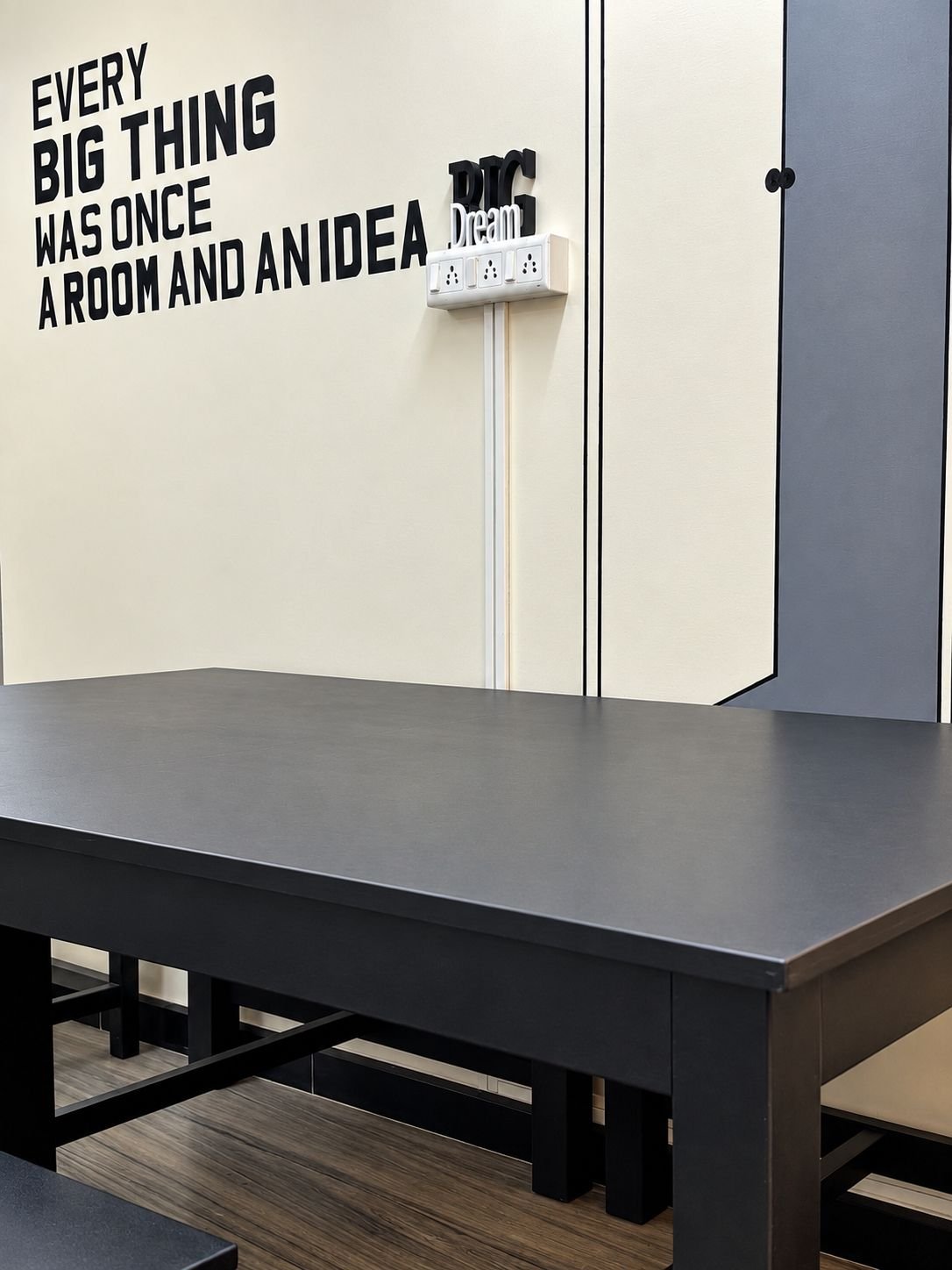
The Fourth Room seats up to 20 in a U-shape, it's air-conditioned, and there's a wall that reads "Every big thing was once a room and an idea." Founders seem to like that. Message us to hold a regular slot.